Grim Forge
Jul 30, 2026
What is forged may never fade.
You ship in bursts. Commits pile up. You open a pull request, and after the merge the story is over. What you need is a historical ledger; not only what changed, but the story behind it.
Grim Forge is the third spell in Grimoire.
/grim-forge maintains a historical ledger at ./HISTORY.md then emits one at-a-glance viewport of the delta to the session window.
The Craftsman
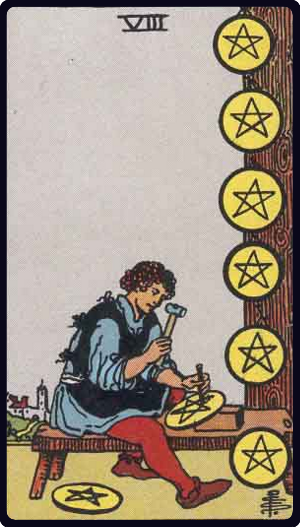
Forging is repetition with intent.
With each pass of the hammer, the craftsman forges the past into permanence. No tale left unwrought, no decision left unmarked.
Thus the record stands via HISTORY.md, an artifact that records the story arc of those changes.
The spell is for durable provenance, not omniscience in one pass.
Example: buildawesome
A Grim Forge genesis run on buildawesome.
Command: /grim-forge
Viewport
An excerpt of the output to the viewport.
buildawesome/HISTORY.md
╞══════════════════◆
│
├─≣ 2026-07-27
│  └─ v4 alpha polish: named export, fixes, dependency bumps.
├─ ...
└─≣ 2018-08-14
   └─ v0.5.1 caps year one; core SSG foundation in place.
HISTORY.md
An excerpt from the HISTORY.md artifact created during this run.
### Origins

Zach Leatherman started the project in November 2017 as a minimal static site generator (`00ad9192`). Within days it gained subfolder templates, CLI flags, and underscore-prefixed file ignores. By early December the name settled on **Eleventy** (`d041111c`), async rendering landed (`c14f1fa8`), and Liquid became the default data engine. Pagination, the `_data` directory, and multi-engine support (Nunjucks, Handlebars, Pug, EJS, Markdown) followed in rapid succession through 2017–2018, establishing the Jekyll-inspired mental model that would define the project.
Other example runs found here.
What the spell does
Forge is not a substitute for maintaining a changelog, it is a historical ledger that captures the story arc of your project:
- Resolve the target - workspace root or named path.
- Distill history. Walk the git log and hunt for documentation to support the narrative.
- Emit artifacts and report. Write the
HISTORY.mdartifact and emit a ledger in the viewport.
History is the spell. The viewport merely captures it.
Strike the ledger. Read the arc. Then decide what comes next.